Chatbot vs Live Chat: Which Converts More Leads in 2026?
Key Takeaways
- AI chatbots convert 35-50% more after-hours leads than live chat because they respond instantly when no human agent is available.
- The average cost per qualified lead with AI chatbots is $8-15, compared to $25-50 with staffed live chat.
- Speed-to-lead is the single biggest conversion driver. Companies that respond within 5 minutes are 100x more likely to qualify a lead than those that respond in 30 minutes (Vendasta, 2023).
- For equipment dealers and small businesses, a hybrid model (AI first contact, human for closing) consistently outperforms either option alone.
- Live chat has a median response time of 2 minutes 40 seconds during business hours, but zero coverage outside those hours without significant staffing cost.
TL;DR: Chatbots convert more leads overall because they respond instantly, 24/7, at a cost of $8-15 per qualified lead. Staffed live chat costs $25-50 per qualified lead and goes dark after business hours. For small businesses and equipment dealers, an AI chatbot handles first contact while a human closes the deal. That hybrid model consistently outperforms either option alone.
Businesses that respond to a lead within 5 minutes are 100x more likely to qualify that lead than businesses that respond in 30 minutes, according to Vendasta's 2023 speed-to-lead research. The problem with live chat: the median response time is 2 minutes 40 seconds during business hours, and zero minutes during the hours when 40-60% of equipment dealer web traffic actually arrives.
That is where chatbot vs live chat becomes a real business decision, not just a software choice.
This comparison covers conversion rates, cost-per-lead, after-hours coverage, and the specific scenarios where each option wins. Equipment dealers and small businesses are the primary reference point because the stakes are high and the margins for error are low.
What Is the Actual Difference Between a Chatbot and Live Chat?
Live chat connects a website visitor with a human agent in real time. The agent types responses, answers questions, and can exercise judgment that a machine cannot. Quality is high when a skilled agent is available. The constraint is availability: humans work shifts, take breaks, and cost money whether or not a conversation is happening.
A chatbot is software that handles conversations without a human. There are two types, and the distinction matters. Rule-based chatbots follow decision trees: if the visitor says X, the bot responds Y. They work for narrow, predictable questions and contact capture but fail when buyers ask anything outside the script. AI chatbots use large language models trained on your business data to understand intent and generate contextually accurate responses. They can handle the full range of pre-sale questions a real buyer asks.
When most people compare chatbot vs live chat, they are comparing AI chatbots to human-staffed live chat. That is the comparison this article covers.
Key takeaway: Rule-based chatbots and AI chatbots are not the same thing. An AI chatbot trained on your product data performs at a fundamentally different level than a decision tree bot, and should be evaluated against staffed live chat, not against each other.
Chatbot vs Live Chat: Side-by-Side Comparison
| Factor | AI Chatbot | Live Chat (Staffed) | Hybrid (AI + Human) |
|---|---|---|---|
| Response time | Under 1 second | 2-5 minutes average | Under 1 second (AI), minutes (escalation) |
| After-hours coverage | 24/7, no extra cost | Requires additional staffing | 24/7 AI, human during business hours |
| Cost per month | $300-$2,500 (flat rate) | $1,500-$12,000 (scales with coverage) | $500-$3,000 |
| Cost per qualified lead | $8-15 | $25-50 | $10-20 |
| Handles complex questions | 80-90% of pre-sale Q&A | 95%+ | 95%+ (AI + human escalation) |
| Scales with traffic spikes | Yes, instantly | No (bottlenecks at peak) | Partially |
| Setup time | Days to weeks | Weeks to months (hiring/training) | Days to weeks |
| Best for | After-hours leads, high volume, cost efficiency | High-touch, complex sales during business hours | Most small businesses and equipment dealers |
Key takeaway: AI chatbots cost 60-70% less per qualified lead than staffed live chat, primarily because they eliminate after-hours coverage gaps without adding headcount.
Does Chatbot vs Human Actually Matter for Conversion Rates?
Speed is the primary conversion driver, not warmth. According to HubSpot's 2024 State of Sales report, 78% of buyers purchase from the first company to respond to their inquiry. That statistic does not differentiate between a human and a bot. It rewards whoever answers first.
During business hours, a responsive human agent can match a chatbot on conversion. The quality advantage of a human matters for nuanced questions and high-trust moments. But most small businesses and equipment dealers are not staffed to respond to every inquiry within 5 minutes, even during business hours. Lunch breaks, active calls, and high-volume periods all create response gaps.
AI chatbots convert 35-50% more after-hours leads than live chat because they respond instantly when no human agent is available. If your website gets traffic from 7 PM to midnight, or on Saturday mornings, every inquiry during those windows goes unanswered with live chat. With an AI chatbot, every inquiry gets an immediate, accurate response.
The math changes depending on your traffic distribution. If 80% of your inquiries arrive during business hours and your team responds quickly, live chat can be competitive. If 40-60% of your inquiries arrive outside business hours, which is typical for equipment dealers and home services businesses, a chatbot's after-hours coverage advantage becomes decisive.
The chatbot vs live chat decision ultimately comes down to when your leads arrive and whether your team can match an AI's response speed.
Key takeaway: Conversion rate is not a fixed number for either option. The chatbot advantage is largest when after-hours traffic is high. The human advantage is largest for complex, high-trust conversations during business hours, which is exactly why a hybrid model outperforms both options alone.
What Does Live Chat Actually Cost? (The Full Number)
The advertised price of live chat software is not the full cost. The real cost includes the humans doing the chatting.
Staffed live chat pricing:
- Outsourced live chat services (third-party agent pools): $400-$1,500 per month for business-hours coverage. Response quality for product-specific questions is often low because agents are not trained on your specific inventory or product lines.
- In-house live chat agent (part-time): $2,000-$4,000 per month including payroll, benefits, and management overhead.
- 24/7 live chat coverage: $6,000-$12,000 per month via outsourced services, or significantly more in-house.
AI chatbot pricing:
- Small business AI chatbots (Tidio, Freshchat AI, similar): $30-$200 per month.
See Why Dealers Choose Memox
Compare AI-powered response vs. answering services side by side.
- AI agents built for specific verticals, like Memox for equipment dealers: $300-$2,500 per month with trained product knowledge and CRM integration.
The cost-per-lead comparison is where the chatbot vs live chat decision becomes clear. A business spending $3,000 per month on staffed live chat that generates 80 qualified leads per month is paying $37.50 per qualified lead. An AI chatbot at $800 per month generating 80 qualified leads (including after-hours leads the live chat setup was missing) is paying $10 per qualified lead.
The average cost per qualified lead with AI chatbots is $8-15, compared to $25-50 with staffed live chat. The gap is driven by flat-rate pricing, no per-agent overhead, and after-hours coverage that adds leads without adding cost.
Key takeaway: The headline software cost of live chat understates the real cost by a factor of 3-5x once staffing is included. AI chatbot pricing is flat-rate and does not scale with conversation volume or hours of coverage.
When Does Live Chat Win?
Live chat is the better choice in specific scenarios:
High-stakes, relationship-driven sales. A $200,000 piece of construction equipment or a long-term service contract requires human judgment, trust-building, and the ability to navigate objections in real time. AI chatbots can qualify the lead and set up the conversation, but a human should close it.
Complex troubleshooting. Post-sale support for technical products often requires back-and-forth problem-solving that benefits from a human who can think laterally. AI can handle FAQ-level support but struggles with novel, multi-step technical issues.
Regulated industries with compliance requirements. Certain financial, medical, and legal contexts require human accountability for advice given. AI chatbots can provide information but should not substitute for licensed professional guidance.
You have the team and the traffic. If you already have a responsive in-house team, your traffic is concentrated during business hours, and your deal size justifies the investment, live chat can deliver strong conversion.
Outside these scenarios, the cost and availability constraints of live chat make it a difficult choice to justify against an AI chatbot alternative.
Key takeaway: Live chat wins when deal complexity, relationship depth, or compliance requirements demand human judgment. For first-contact lead qualification, the job most equipment dealers and small businesses actually need done, AI chatbots are faster, cheaper, and available when it matters.
How AI Chatbot vs Live Agent Plays Out for Equipment Dealers
Equipment dealers face a specific version of this problem. HVAC, container, heavy equipment, and security system dealers share three characteristics that make chatbots particularly well-suited:
1. After-hours inquiry volume is high. Homeowners research HVAC replacements in the evening. Contractors browse container inventory on weekends. Decision-makers for heavy equipment are often on job sites during business hours and do their research afterward. See AI chatbot vs live chat for equipment dealers for the full breakdown of traffic timing data.
2. Pre-sale questions are repetitive and product-specific. Buyers ask the same questions: pricing ranges, delivery zones, lead times, condition grades, modification options. An AI chatbot trained on a dealer's inventory answers these accurately and consistently. A third-party live chat agent pool cannot.
3. The cost of a missed lead is high. A container sale is $3,000-$8,000. An HVAC system is $8,000-$20,000. A piece of heavy equipment can be $50,000-$200,000. See the real cost of missed leads for what missing 10 leads per month actually does to annual revenue at these deal sizes.
Memox, an AI-powered sales agent for equipment dealers, is built for this use case: product-specific AI knowledge, 24/7 availability, and escalation to a human sales rep when a conversation is ready to close. See our Memox vs LiveChat comparison and how Memox compares to Intercom for a direct look at features and pricing against the major live chat platforms.
Key takeaway: For equipment dealers, the typical chatbot deployment captures 30-50 additional qualified leads per month that would have been missed by business-hours-only live chat. At a $5,000 average deal size and a 15% close rate, that is $22,500-$37,500 in additional pipeline per month from a single change.
Is There a Live Chat Alternative That Gives You the Best of Both?
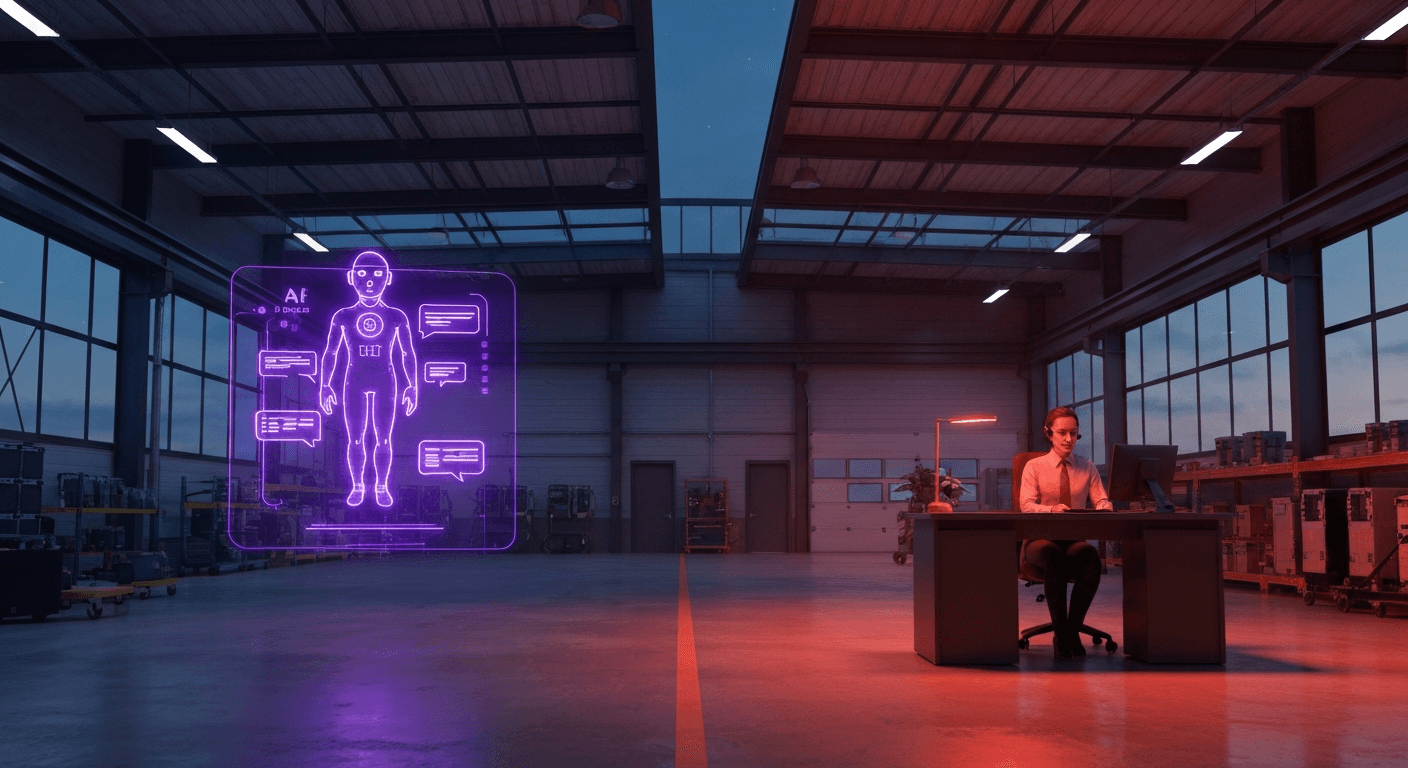
Yes. A hybrid model uses an AI chatbot for first contact and qualification, with seamless escalation to a human agent for conversations that require it.
The AI handles the work that does not need a human: immediate response, FAQ-level questions, lead qualification, contact capture, appointment scheduling. When a conversation reaches a threshold, the AI transfers to a live agent with full context, so the human does not start from zero.
This approach delivers the speed and availability of a chatbot with the judgment of a human agent at the moment it actually matters. Most small businesses and equipment dealers do not need a human for every conversation. They need a human for the conversations that are close to closing.
Platforms that support this model include Tidio (AI chatbot with live agent option), Intercom (automation with human handoff), and Memox (AI-first with escalation built for equipment dealer workflows).
Key takeaway: The live chat vs chatbot framing is a false choice for most businesses. A hybrid model captures the conversion advantages of both: AI speed and availability for first contact, human judgment for deal-closing moments.
FAQ: Chatbot vs Live Chat
Do chatbots actually convert leads better than live chat?
It depends on when leads arrive. During business hours with a responsive team, live chat can match or beat a chatbot. Outside business hours, chatbots win decisively because they respond instantly when no human is available. According to Vendasta (2023), responding within 5 minutes makes a company 100x more likely to qualify a lead than responding within 30 minutes. For businesses where 40-60% of traffic arrives outside business hours, chatbots convert more leads in aggregate.
What is the real cost difference between a chatbot and live chat?
Staffed live chat costs $1,500-$12,000 per month depending on hours of coverage, versus $300-$2,500 per month for a capable AI chatbot. The cost-per-qualified-lead comparison almost always favors AI: $8-15 for AI chatbots versus $25-50 for staffed live chat. The gap is driven by flat-rate AI pricing and after-hours lead capture that live chat misses entirely.
Can a chatbot handle complex product questions from equipment buyers?
A well-trained AI chatbot handles 80-90% of pre-sale questions: pricing, delivery zones, lead times, product comparisons, and condition grades. Questions requiring custom pricing, negotiation, or a relationship call should route to a human. The key is an escalation rule set that recognizes when a conversation needs a person, and hands off cleanly with full context.
Should I use a chatbot or live chat for high-ticket sales?
Use both in sequence. AI for first contact and qualification, human for closing. Research from HubSpot (2024) shows 78% of buyers purchase from the first company to respond. For high-ticket sales, the first-contact job is to respond fast, qualify the lead, and set up the human conversation that closes the deal. That first-contact job is where AI consistently outperforms staffed chat.
What is the best live chat alternative for a small business?
An AI chatbot trained on your product data and configured with escalation rules is the most practical live chat alternative for most small businesses. It covers after-hours traffic, responds in under a second, and costs a fraction of staffed chat. Memox provides this as a configurable deployment for equipment dealers and small businesses. Other options include Tidio (AI plus optional live agents) and Freshchat (AI-first with human escalation).
Bottom Line
Chatbots win on cost, availability, and after-hours conversion. Humans win on judgment and relationship-building at the closing stage. The highest-converting setup combines both: AI for first contact, human for close.
If you are running a small business or equipment dealership and choosing between a chatbot and live chat, the decision comes down to one question: what percentage of your leads arrive outside business hours? If the answer is more than 20%, a chatbot or hybrid setup will outperform staffed live chat on cost-per-lead, and the gap grows with every percentage point above that.
Live chat is not obsolete. It is the right tool for the right moment: complex conversations, high-trust decisions, and closing calls. The mistake is using it as a replacement for a system that can handle first contact at 2 AM on a Sunday.
The chatbot vs live chat comparison resolves clearly for most small businesses: AI handles the first touch, humans handle the close, and the hybrid model captures leads neither approach would get alone.
Calculate your missed lead cost and see how much pipeline your current setup is leaving on the table. Dealers who switch from live-chat-only to an AI-first hybrid typically see 30-50 additional qualified leads per month from the same traffic.
Calculate your missed lead cost to see the number for your business.
See Why Dealers Choose Memox
Compare AI-powered response vs. answering services side by side.
Frequently Asked Questions
It depends on the time of day. During business hours, a well-staffed live chat team can match or beat a chatbot on conversion because human agents handle nuance better. But most small businesses and equipment dealers are not staffed 24/7. Chatbots respond instantly at 2 AM, on weekends, and during lunch breaks, and according to Vendasta (2023), responding within 5 minutes makes you 100x more likely to qualify a lead than responding within 30 minutes. Because chatbots eliminate response delay entirely, they convert significantly more after-hours inquiries. For dealers where 40-60% of web traffic arrives outside business hours, this gap is decisive.
Staffed live chat for business hours (8am-6pm, Monday-Friday) costs roughly $1,500-$4,000 per month through an outsourced service, or significantly more if you hire in-house. Extending to 24/7 coverage typically costs $6,000-$12,000 per month. AI chatbots for small businesses and equipment dealers typically run $300-$2,500 per month with flat-rate pricing regardless of conversation volume. When you calculate cost-per-qualified-lead, total spend divided by leads that enter your sales pipeline, AI chatbots usually land at $8-15 per qualified lead versus $25-50 for staffed live chat. The gap widens further when you factor in the after-hours leads that live chat simply misses.
A well-trained AI chatbot can handle 80-90% of pre-sale questions equipment buyers ask: pricing ranges, delivery zones, lead times, stock availability, product comparisons, condition grades, modification options, and financing availability. Questions that require real-time custom pricing, contract negotiation, or a relationship call are better handled by a human. The key is training the AI on your specific inventory and product data, and setting clear escalation rules so complex inquiries route to a human without friction. Rule-based chatbots (old-style decision tree bots) cannot handle this range of questions, but AI language model-based chatbots can.
Use both in sequence. AI handles first contact and qualification; humans close the deal. Research from HubSpot (2024) shows that 78% of buyers purchase from the first company to respond. For high-ticket sales, a $40,000 excavator, a fleet of shipping containers, or a whole-home HVAC system, the first-contact job is to respond fast, answer basic questions, and qualify the lead so a human sales rep can take over with context. Trying to close a large deal through chat alone, whether with a bot or a live agent, misses the point. The goal is a warm, qualified handoff.
An AI chatbot configured with your product data and escalation rules is the most practical live chat alternative for most small businesses. It covers after-hours traffic, responds in under a second, and costs a fraction of staffed chat. Memox, an AI-powered sales agent for equipment dealers and small businesses, provides this as a configurable, no-code deployment. Other options include hybrid services like Tidio (AI plus optional live agents) or rule-based bots like Tawk.to, but rule-based bots struggle with anything beyond simple FAQ answers and contact capture.